
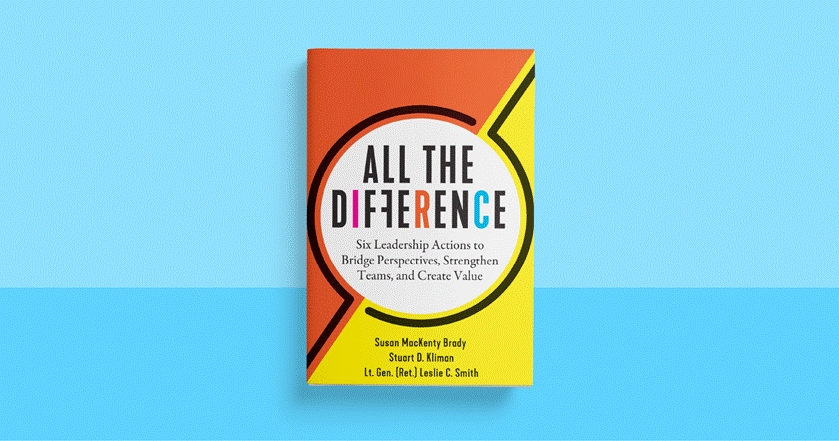
Today's teams span generations, backgrounds, working styles, and perspectives like never before. For many organizations, that complexity feels like an obstacle to overcome.
But what if it's actually your greatest untapped advantage?
That's the premise behind All the Difference: Six Leadership Actions to Bridge Perspectives, Strengthen Teams, and Create Value, the new book from Vantage Partners founding partner Stuart D. Kliman and leadership experts Susan MacKenty Brady and Lt. Gen (Ret.) Leslie C. Smith.
Drawing on decades of experience advising senior leaders, the authors share research and case studies from organizations including Disney, Toyota, UBS, and the U.S. Army. Through a practical framework of six leadership actions, All the Difference shows how leaders can strengthen trust, improve decision-making, and create more value by bringing different perspectives to the table.
Stu recently gave the Vantage team a behind-the-scenes look at the book, generating plenty of excitement and questions. Liz Rayer, Managing Partner at Vantage Partners and one of Stu's longtime colleagues, continued the conversation to dig deeper into what inspired the book, why leading through difference has become an essential leadership capability, and what leaders can start doing today to build stronger teams and better business outcomes.
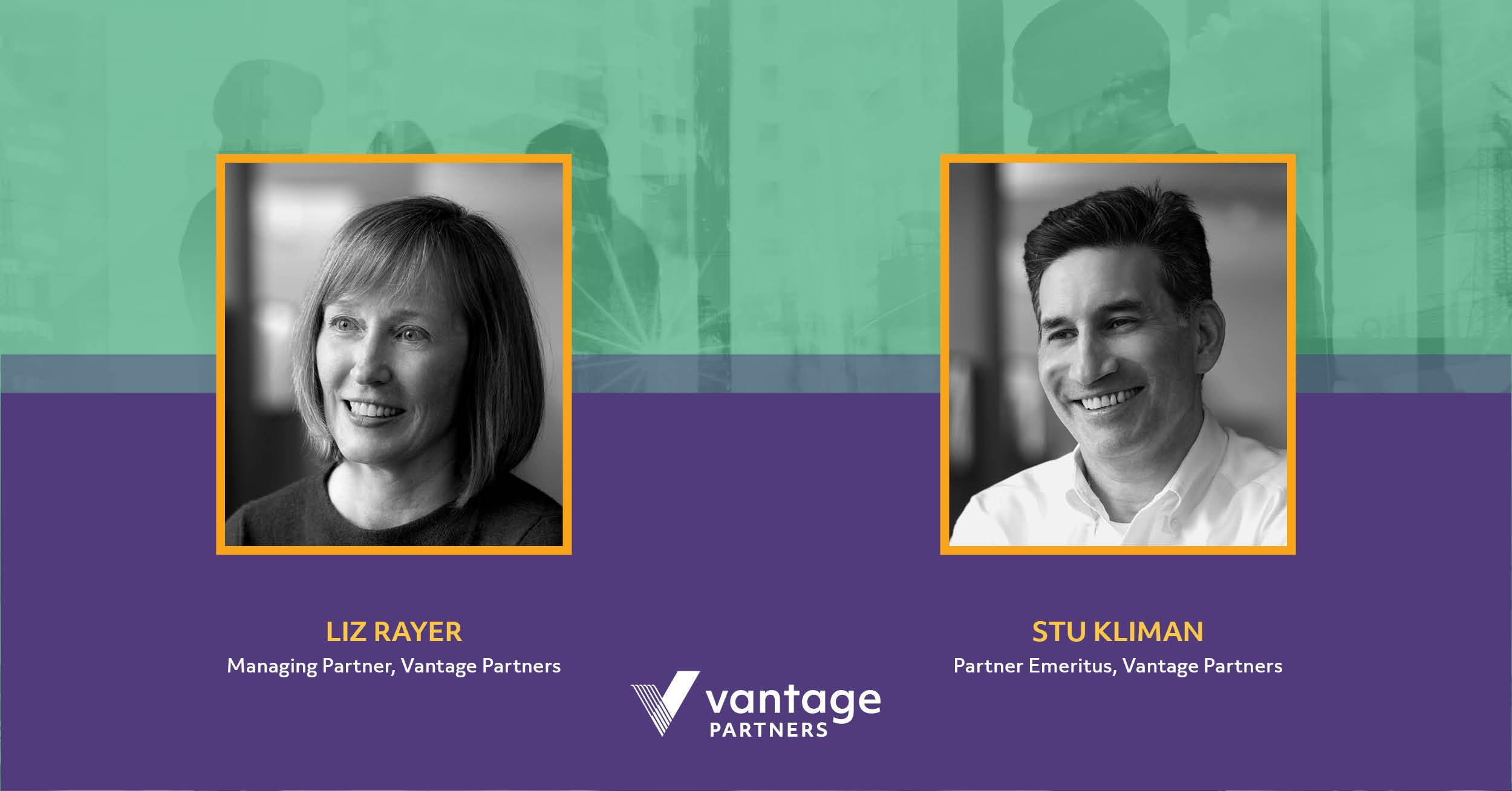
From Collaboration to Co-Authoring: Living the Lessons of the Book
Liz Rayer: Stu, thanks for taking the time to talk with me in more detail about your book. When you spoke with the Vantage team, one thing that really stuck with me was that you and your co-authors were writing a book about navigating differences while working through plenty of differences yourselves. In some ways, you were living the very challenge you were writing about. What did that look like in practice?
Stuart Kliman: It was a live case study of everything we're describing, and that was entirely intentional. We come from genuinely different worlds. Susan has spent decades as a coach, educator, and author and leads a university-based leadership institute. Les spent a lifetime in the Army, where leading through difference was a survival requirement. And I built my career as a management consultant focused on high-stakes collaboration.
It would be hard to find three more different professionals to write this book.
So yes, challenges showed up: debates about framing, which stories to tell, how hard to push on certain ideas. When our different instincts pointed in opposite directions, we had to do exactly what we ask of leaders in the book: slow down, widen the lens, get curious before getting certain.
The book is better because of that friction. Every place we pushed back on each other and worked through our differences is where the thinking got sharper, the frameworks more robust, and the examples more real.
Liz: It sounds like the successful writing of the book became proof that the approach works.
Leadership Actions That Turn Difference Into Value
Liz: One thing that jumped out at me was how practical it is. It moves beyond the idea that difference matters and focuses on what leaders can actually do differently. Can you walk us through a few of the leadership actions you describe in the book and explain how they help leaders turn difference into value?
Stu: Sure thing. "See the Full Story" requires resisting snap judgment and genuinely widening your lens before you act. Ask yourself, “What perspective am I not hearing right now, and why?” Leaders who build this habit make better decisions because they're working with more complete information. The best teams don’t think the same, they think across perspectives. That's a completely different capability, and this action is how you build it.
"Ignite Togetherness" takes that wider view and puts it to work through collective intelligence. It means using the varied capabilities in a workplace to produce more creative, better-informed solutions. You tap into perspectives you would’ve missed, and you build the buy-in that holds under pressure.
"Commit to Action" ties it all together. The other target actions only work if you hold yourself and others accountable to practicing them consistently, not just when convenient. Managing difference isn't a soft skill anymore. It's the core operating system of leadership, and the target actions in our book are how you install it.
Liz: I really like that framing—that this is not simply a set of behaviors, but an operating system for how leaders think, decide, and act.
The Hidden "Landmines" That Hold Leaders Back
Liz: Another framing used in the book is the term “landmines.” It's a memorable way to describe the things that trip leaders up without them even realizing it. Can you explain what they are and why that metaphor matters?
Stu: We identified four landmines that cause even the most well-intentioned leaders to stumble. The biggest risk in leadership is the landmines we don't see and therefore don't defuse.
- Certainty is the costliest. It’s when you're so convinced you're right that you've stopped listening. You lose access to the very perspectives that could sharpen your thinking.
- Inconsistency is the gap between what leaders say they value and how they actually behave. Teams notice immediately, even when leaders don't.
- Reactivity is when an emotional trigger pulls a leader out of their best self at exactly the wrong moment.
- Justification is the mental gymnastics we do to rationalize a decision we've already made.
These landmines actively undermine a leader's ability to put the target actions into play. You simply can't tap into the value of difference if those landmines are going off in your head.
Why Curiosity Beats Certainty
Liz: Those landmines are challenging because they often show up in the moment, when leaders are under pressure and reacting before they have had a chance to step back. What does it take to create a culture where leaders and teams can recognize those patterns, interrupt them, and make space for different perspectives to thrive?
Stu: The goal is to create the conditions where people are actively working to tap into the value that others bring to the table. That's a concrete, business-oriented target, and it changes what you focus on.
Leaders can shape that culture with consistency—where their behavior matches their stated values—and the signals they send in ordinary moments: who they ask for input, whose ideas they build on, how they respond when challenged. When leaders handle disagreement with curiosity rather than defensiveness, they signal that difference is safe to express.
Liz: That distinction between curiosity and defensiveness feels critical. I often say that even being 1% curious can change the quality of a conversation, and on teams with very different perspectives, people can still interpret the same moment in very different ways. What helps leaders catch those assumptions before they turn into misunderstanding?
Stu: The biggest source of misunderstanding isn't dishonesty—it's assumption. People fill gaps with their own mental models, and those models can be wildly different, especially on difference-filled teams. Someone sees a direct challenge in a meeting as engagement, but someone else experiences it as disrespect. Someone reads silence as agreement, but someone else is silent precisely because they disagree.
Our target action "See the Full Story" is about building the habit of checking assumptions before acting on them. This is especially hard for experienced leaders who've learned to move fast. But the most effective leaders use tension as a signal: Something is happening here, and this is an opportunity to learn. Slowing down to ask, "What might I be missing?" or "What are each of you missing about the other's view?" is one of the highest-leverage investments a leader can make in team performance.
Beyond Emotional Intelligence: Building "Difference Intelligence"
Liz: That ability to pause, question your own interpretation, and stay open to what you may be missing requires a great deal of self-awareness and discipline. With how fast-paced work has become, with the growth of AI, and just how complex organizations are, there seems to be an even greater need for human, interpersonal skills. From your perspective, what role does emotional intelligence play in helping leaders navigate difference effectively?
Stu: Yes, that’s definitely top of mind for many leaders. The workforce is only growing more complex and elevating the emotional temperature at work. Leaders who can't read a room, regulate their own reactions, or attune to what's happening beneath the surface are at a growing disadvantage.
We think about emotional intelligence not as a personality trait but as a set of learnable skills: noticing your internal state, interrupting reactive patterns, staying grounded when others aren't, and choosing how to engage from clarity rather than charge. These are the skills that determine whether a difficult conversation about difference creates value or destroys it. Technical expertise gets you into the room, but emotional intelligence determines what you build there.
That said, although emotional intelligence is key, a different framing that we really like is “difference intelligence" — which we believe is very specifically about the mental models and skills to specifically lead through and create value out of difference. Leaders with “difference intelligence” actively look at their workforce as a sea of difference, they see in those differences dormant capital, and they use the six target actions we describe in the book to purposefully tap into that value to create alignment, innovation, and speed.
Liz: That's a helpful way to think about it. Throughout the book, you share examples from organizations that have put these strategies into practice. Is there one example that really captures what this approach looks like in the real world?
Stu: One of our favorite success stories is from Toyota. When Toyota underwent a major digital transformation, they brought in top Silicon Valley talent: engineers, UX designers, data scientists. Almost immediately, everything stalled. The tech teams wanted fast iteration, but Toyota's legacy leadership saw that as reckless. Both groups had good intentions and zero ability to see each other's mental models.
We interviewed a key leader who recognized that it wasn't a process problem, it was a difference problem. She convened conversations where each side had to explain not just what they were doing, but why. Once they could see each other's perspective, they stopped fighting and started building. The transformation actually worked.
One Leadership Habit to Practice Tomorrow
Liz: That’s a great example. I have one final question for you: If someone finishes All the Difference and heads into work the next morning, what's one thing you hope they'll do differently?
Stu: Get curious before you get certain. The next time your first instinct in a meeting is to push your view, pause and ask a real question first—not a leading one, a genuine one. "What am I not seeing here?" or "Walk me through how you got there." It sounds small, but it's one of the highest-leverage moves available. You slow down the certainty reflex, signal that other perspectives have value, and almost always surface information that makes your decision better.
Liz: “Get curious before you get certain” is a wonderful note to end on. Thank you, Stu, for taking the time to speak with me, and congratulations on the publication of All the Difference, available now. It is a timely, practical, and thought-provoking guide for leaders, and I know readers will find tremendous value in it.
Stuart D. Kliman is available to speak to audiences about All the Difference and its lessons for today’s leaders. Contact us to learn more.